I’m sure many people reading this are familiar, on some level, with Woodland Pattern, but suffice it to say it is a non-profit books/arts center in Milwaukee that is one of the major hubs of poetry in the Midwest and the entire country. We are lucky it is so close, and I think it sometimes gets taken for granted in SE Wisconsin just how important it is. It is respected nationally among poets and experimental musicians
I had hoped to write a post for this week with an analysis of a procedurally written piece of modern poetry by a well-known author, *but* the last 2 days were Woodland Pattern’s annual Poetry Marathon fundraiser. Over the course of 2 days they host 24 hours of poetry! Many Milwaukee and Wisconsin poets take place as well as guests who drive/fly in from all over. Additionally, there are some pre-recorded videos of poets from farther abroad as well. I was lucky to co-host the Racine & Kenosha Poets hour with my friend, Debra Hall (who just released her new book, What the Current Cannot Swallow – https://us.amazon.com/What-Current-Cannot-Swallow-Debra/dp/1997737051) We had additional local poet friends who took part in other segments as well.
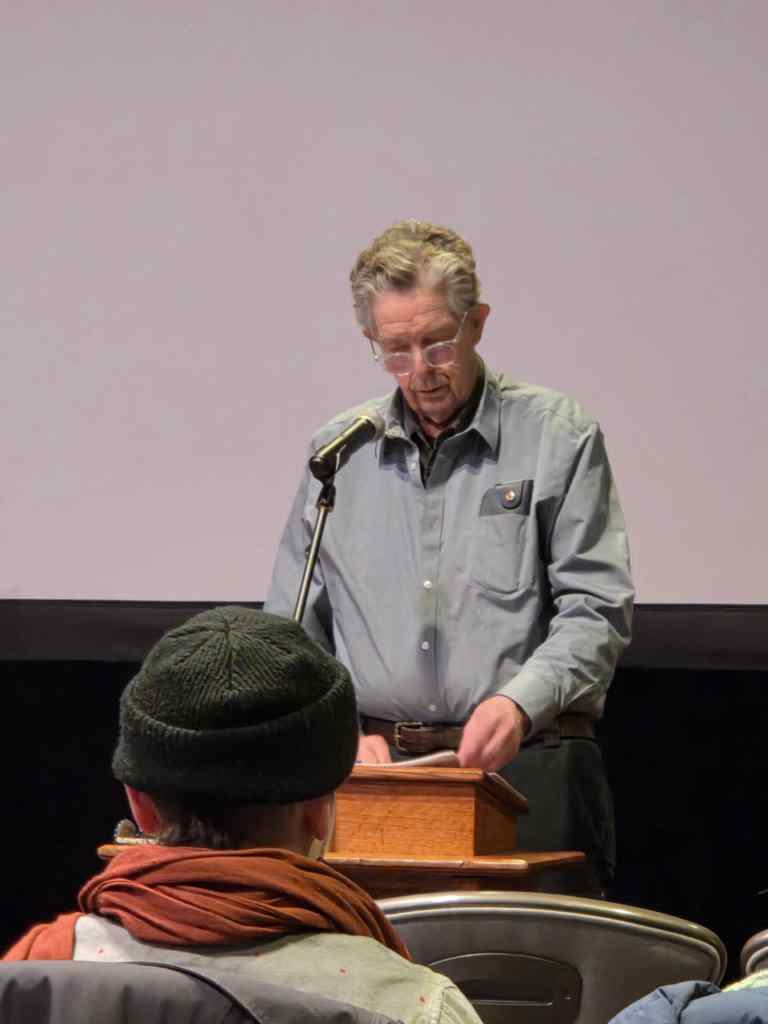
Karl Gartung, one of the co-founders of Woodland Pattern, shares stories about its history, and his discovery/meeting of artists like Jackson Mac Low.
It was quite the weekend, and suffice it to say, there was not time to write the post I had hoped for, but I do want to encourage people to check out some of the video of the weekend if possible! Everything was live streamed. There should be a link to view it on Crowdcast at the bottom of this page:
https://woodlandpattern.org/poetry-marathon
It was great to hear so many friends and meet new acquaintances! A few notable highlights for me included:
The WI Poet Laureate hour, which featured several past and present Milwaukee Poet Laureates as well as several past and current Wisconsin state Poet Laureates. Brenda Cardenas is our current state laureate and one of the strongest readers I’ve heard. I feel lucky to have heard her many times now and shared the stage on a couple occasions.
Oxeye Press and Pitymilk Press are two small presses out of Madison and Milwaukee WI respectively. Oxeye is run by Jordan Dunn, and Pitymilk by Chelsea Tadeyeske & Edie Roberts. Their back-to-back half hour segments were full of great readings! I knew about half of them and was happy to discover the others.
My opinion is extremely skewed here, but I was really proud of our Racine/Kenosha hour! Our readers were: Debra Hall, Nick Ramsey, Christy Hoff, Mary Skillings, Thomas Carr, Darin Zimpel, Nico Moore, Nicholas Ravnikar, Holland Dvorak, and myself (Jay Mollerskov). I attended a lot of the weekend in person and I thought our hour was one of the most varied. We had everything from freestyle rap to tradition poems to sound poetry to audience participation poems!
The Latine hour—curated by Brenda Cardenas & Roberto Harrison was phenomenal as well! It was a mix of video and live readings. The videos by Christina Vega-Westhoff, and Roque Raquel Salas Rivera were amazingly artistic.
There were a lot of other individuals that stood out as well, so my apologies to anyone left off this quick list. I encourage people to check out the archived video for themselves!
Once it gets posted to Youtube I will try to edit in a link to that as well. The Racine & Kenosha poets were Day 2 at 2pm.
So, for this week the main things I wanted to say are:
1) check out Woodland Pattern if you haven’t! They will be open in the Riverwest neighborhood through May before closing for several months to move to a new location in Bayview.
2) Cherish and support your local arts community! Join it! Be active in it! The energy and mutual support that comes from being out and regularly active in a local arts community is so important. Gertrude Stein hosted weekly salons at her house with such famous artists as Picasso, James Joyce, Ernest Hemingway, Henri Matisse, F Scott Fitzgerald, and Ezra Pound. Yeats started the (unfortunately all-male) Rhymers’ Club in London in the 1890s. The Beats including Ginsberg, Kerouac, Snyder and others regularly met at City Light bookshop to work on and share ideas. You don’t need to wait for a famous poet in your area. Just get together with other writers & artists, and the rest comes pretty naturally when you open up, bring a spirit of curiosity and excitement, and share with each other!
Sometimes that means someone has to put in a little extra work to get things started. Or, in the case of the Poetry Marathon, it means a whole group of people dedicate a LOT of their time and energy to make a great annual event happen. Thanks to all the WP employees and volunteers that came together to create a wonderful weekend!
I got home last night feeling tired yet energized, and I wrote the following piece —
note: for ease of reading for now, I spell “wind” two different ways.
wind = noun, short-i, sounds like “ih” as in “the wind blew”
wynd = verb, long-i, sounds like “eye” as in “a winding river”
Water Wings
by Jay Mollerskov
Water wings –
The wind has a way
The wings have wind
The way the water wynds
Water has a way with wings
The way the water wings wynd
The way has water
The wind has wings
The way water has wings
The water has wind
It wynds away
The water has a way
The waterway has wind
The way the wind
has with wings
The way wings have the wind
The wind with water the
way the waterway
has wings
The way the wayward
wings have the water
with the way the
wind has with the wings
With the wind, the
way the wind has water,
the water wings wynd
They, the wings, the wind
wynds with them, the
way water wynds the
waterways.
The waterways wynd
winsome with the wind,
the wind wynds with
them.
The water and the wind
wynd their way westward.
The west wind wynds westward
the way the water wynds.
Winsome in its way, the
wings on the water wynds
the waterways westward
the way the water
has with wings.
The way the wings wynd, they
wynd their way to water
the way the water and
the wind wynd with one
another.
Each winsome wing, its wind
wynding the way wings
wynd in the wind.
And the way they wynd,
the wings wynd their
way westward, winsome
in the way they wynd
the waterways, the way
the water wynds the
waterways when it wynds
its way westward.
closing question: Does it help you as a reader to have wind spelled the 2 different ways depending on pronunciation? I think it definitely helps me read it aloud smoother, but I’m curious how others feel about it as well. Prior to that, I was tripping over it here and there when reading aloud and I am the one that wrote it!
Thanks everyone, and have a great week!
Jay Mollerskov, ArtRoot Writer-in-Residence – 1/26/26
 ArtRoot Writer-In-Residence
I think your poetry is very difficult to translate off the page. It is very performance based. Changing the spelling of wind/wynd does help to carry some of that vocal difference into the reading.
LikeLiked by 1 person
Yeah, I was listening to some clips of Gertrude Stein reading awhile back and I think this came from that place. Also, the twisty way Leslie Scalapino often wrote.
I found quickly while softly speaking aloud as I was writing the first few lines that it helped me. I have created various personal notation marks I use when writing out my sound poetry as well to give myself reminders about pronunciation, especially of vowels since we have multiple sounds for each.
Thanks for the feedback!
LikeLike