I was at our local Grassroots Open Mic earlier tonight, and our friend and featured reader, Todd Johnson, made a comment disparaging “the corruption of the language.” Although I kind of assumed I knew where he was going with it, I later questioned him about what he meant. He explained that he was talking about people using language for deception, corruption, greedy profit, etc (basically everything our corrupt and wicked controlling politicians and their cohorts are up to these days.)
Whew! I figured that was what he meant, but I often think about the evolution of language and how today’s slang, which as we get older seems more and more terrible and bizarre, becomes tomorrow’s vocabulary. This is just the common and unavoidable, never-ending evolution of language though.
I remember reading Beowulf in high school and during one class our teacher shared a record of Beowulf being read in original Old English. It is unrecognizable!
I have been teaching music lessons, largely to kids, for 28 years now, and I try to keep this in mind as I hear slang and vocabulary change. I still refer to things as “rad” and “sick!” So, maybe “rizz” isn’t that terrible after all?
No cap, when Grendel hit everyone was all Menty B, but Beowulf had mad aura and went skibidi sigma on his azz. Gyat! Beowulf madddd flexed and Grendel was cooked.
Okay, that’s still pretty awful. . .
Anyway, among other things, I’ve been reading some translations of older Chinese poetry lately. I’m very into modern/abstract writing, but I have a soft spot for the absolute beauty in well-translated Chinese poetry. A couple books I picked up that I’d recommend are:
Study of Sorrow: Translations – translations by Shangyang Fang – translations of work by 29 Song dynasty (960-1279 CE) poets. (Copper Canyon Press)
In the Same Light: 200 Poems for Our Century – translations by Wong May – translations of work from Tang dynasty (619-907 CE) poets
As I’ve gotten into things like this, as well as re-reading the collected poems of my favorite short story writer, Jorge Luis Borges, I’ve really come to appreciate the act of well-translated poetry. Finding the right choice of words to convey not only the subject matter, but the feel, rhythm, sound of the lines is a big task!
The flip side of this is something else I enjoy reading. . . intentionally mis-translated or poorly translated material. The point of this isn’t to translate the original work into a comparable form in another language, but to use the original text as a seed from which something new can grow.
My friend Steve Timm has a poem along similar lines, but inspired by his experience of not hearing well prior to getting hearing aids. I think this easily qualifies as intentional mistranslation for creative purposes!
I’ve been busy with other writing/reading lately, but I want to try my hand at mis-translation as well. The approach I’ll be starting with is using text written using alphabets/script other than the “Latin script” that we use in English, Spanish, etc. Cyrillic seems like a good candidate because it has some very similar looking letters, but not everything corresponds exactly.
Beyond that, I could imagine taking things like Chinese script and trying to look at the shapes and imagine what words it might be referring to. Or taking a word search and using the garbled random letters between the answer words to form the basis of a poem. Or intentionally incorrect answers to crossword puzzles.
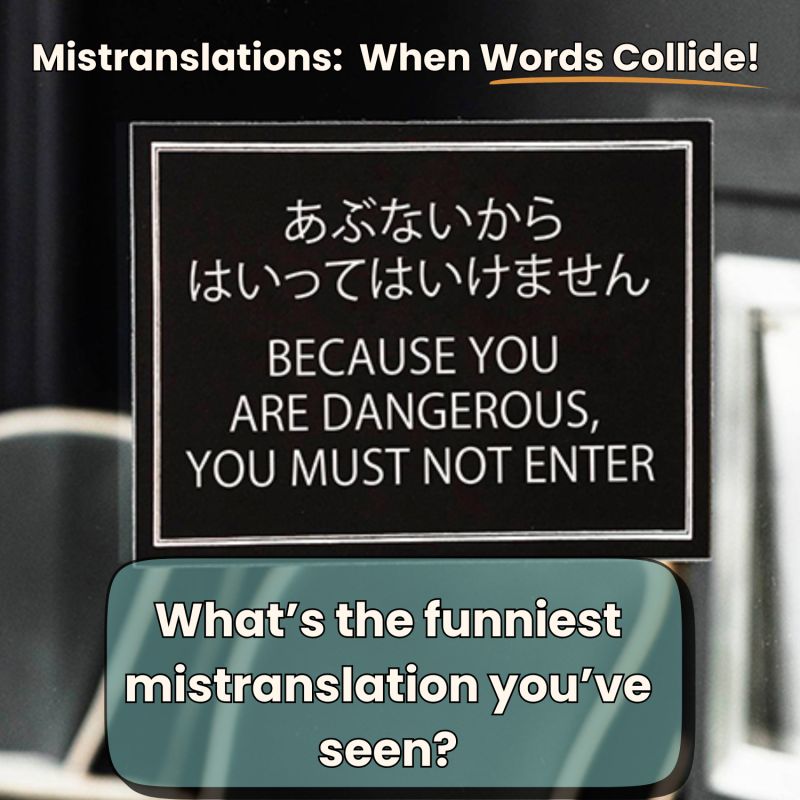
If you do it right, you can also input text into an online translator, then run it through language after language for awhile, and eventually back to English. It often warps things in fun ways.
When it comes down to it, there are tons of ways to “corrupt the language” that don’t involve being a shitty politician! Hopefully this gives you some fresh ideas for ways to play with language and create something new!
Jay Mollerskov, ArtRoot Writer-In-Residence – 3/26/26
 ArtRoot Writer-In-Residence